01
The problem I saw
A simple net-worth check should not require bank credentials or a new account. Cloud sync can make access easier, but it also asks the user to trust another store of financial records.
02
What I built
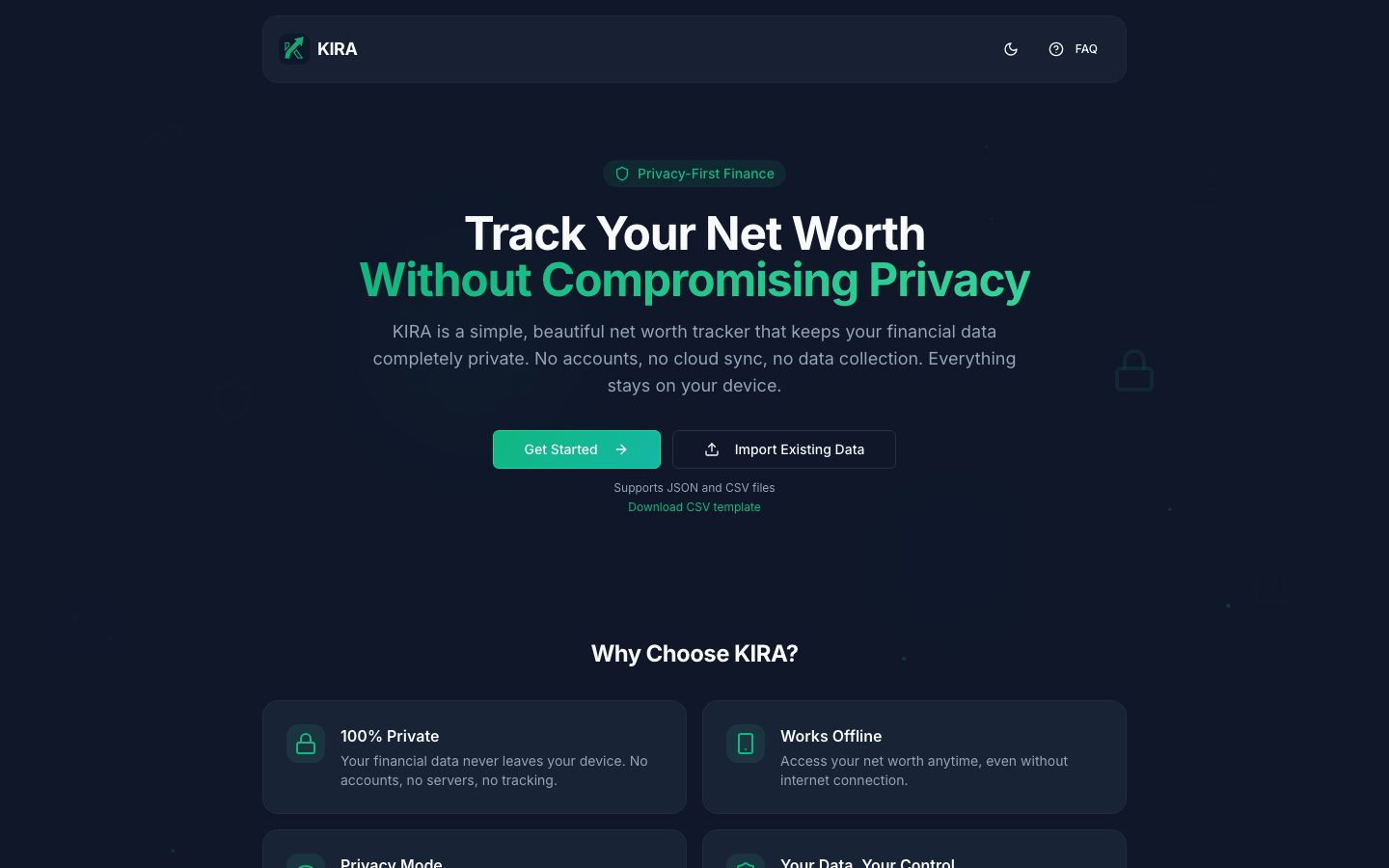
KIRA uses manual entry for assets and liabilities. It shows net worth, allocation, and progress views. A person can import JSON or CSV, download a CSV template, install the app, use it offline, blur numbers with Privacy Mode, and export or delete local data. The public page states that records stay on the device.
03
What I learned
Local storage reduces one trust burden and creates another. The product must remind users that privacy on one device does not protect them from device loss.
PAIN POINTS
What the product addresses
- Sensitive financial data uploaded by default
- Account creation before value
- Simple tracking bundled with unnecessary platform dependence
DECISIONS
Decisions that shaped it
- Use manual entry instead of requesting bank credentials.
- Keep the core app available without an account or cloud sync.
- Add import and export so the user can make a manual backup.
- Include Privacy Mode for viewing the app around other people.
LEFT OUT
What I deliberately did not build
- Mandatory bank connections for a simple net-worth view.
- Automatic cloud sync without an explicit user choice.
MEASURES
What I would measure
- Users who add both an asset and a liability.
- Imports restored without losing categories or values.
- Users who understand that local storage still needs a manual backup.
EVIDENCE AND BOUNDARIES
What this note is based on
- Visible on kira-money.netlify.app on 21 July 2026: manual asset and liability tracking, JSON and CSV import, CSV template, offline install, Privacy Mode, and local data controls.
- This is a personal tracking utility, not financial advice. I did not verify calculation accuracy, encryption, backup reliability, investment performance, bank connectivity, or regulatory status.
RELATED WORK