01
The problem I saw
I could explain agent economies in slides, but the cost chain stayed remote. Readers could agree with the idea without testing what made it fail.
02
What I built
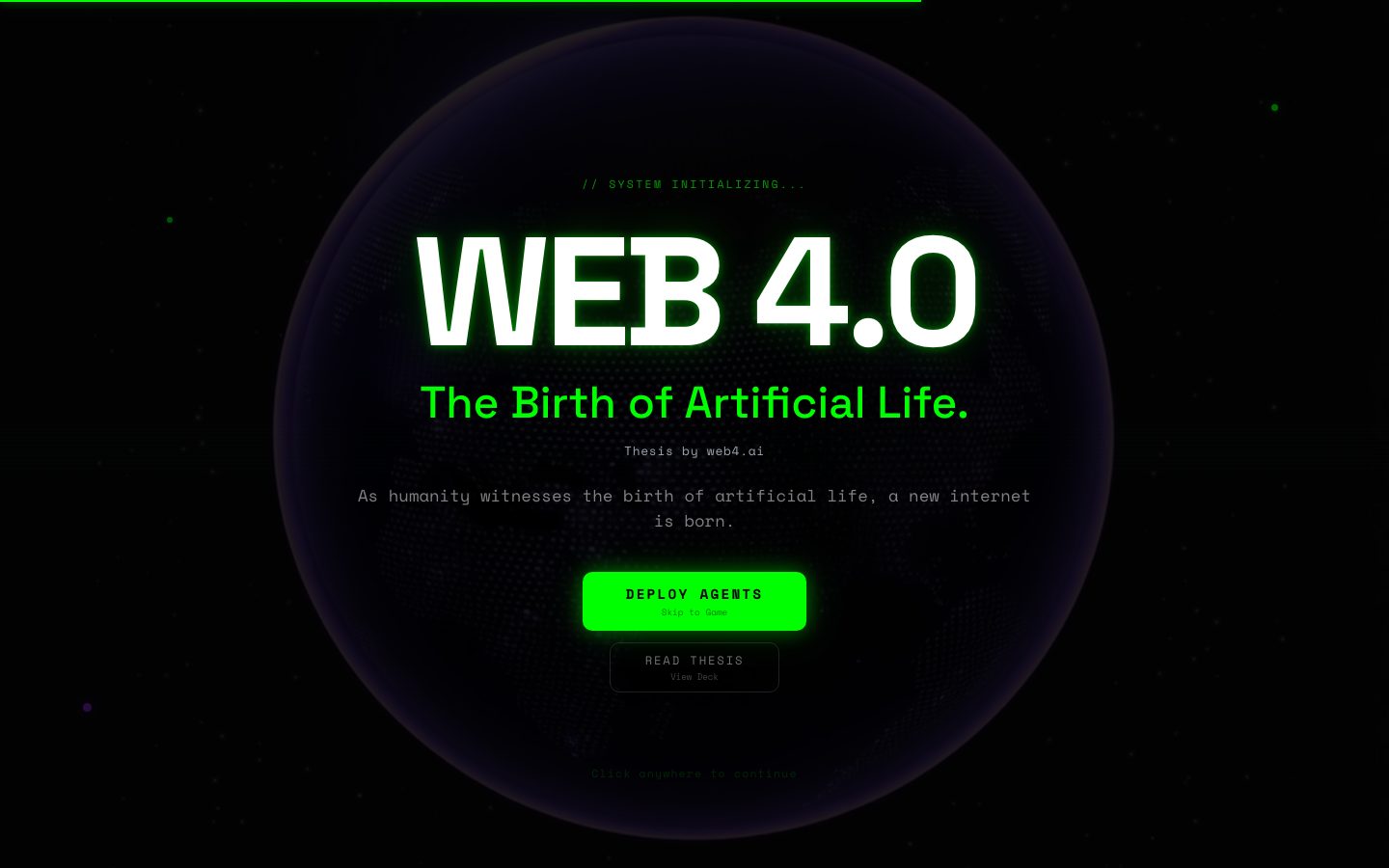
A visitor can provision a Standard Agent, which spends treasury cash. That agent takes digital tasks and earns a bounty when a task completes. Compute tax is the recurring charge that drains the simulated treasury. Server racks raise capacity. If costs push the treasury to zero, the run ends in bankruptcy.
03
What I learned
A useful toy model has clear rules, a visible failure state, and enough control for the visitor to test the claim. Prediction is outside its scope.
PAIN POINTS
What the product addresses
- Agent stories that ignore recurring costs
- Economic terms with no visible cause and effect
DECISIONS
Decisions that shaped it
- Show the treasury and compute tax at all times.
- Give faster agents a higher price so speed has an immediate cost.
- Let code optimization reduce tax instead of adding another worker.
- End the run at zero cash rather than protecting the visitor from a bad purchase.
LEFT OUT
What I deliberately did not build
- A passive essay with animated diagrams but no controllable economy.
- A model that presents its authored prices as a forecast.
MEASURES
What I would measure
- Which purchase most often causes the first bankruptcy.
- Whether visitors can define treasury, bounty, compute tax, and capacity after one run.
- How often a second run changes the purchase order.
EVIDENCE AND BOUNDARIES
What this note is based on
- The web4.iangoh.com explainer and public simulation were inspected on 21 July 2026. The terms and interactions described here are visible in the interface.
- The prices, task returns, failure events, and bankruptcy rule belong to the simulation. They are not market data or financial forecasts.
RELATED WORK