01
The problem I saw
A short personality quiz can return a confident label with little context. It may also collect an email before showing any value. I wanted the result to be readable without pretending the old temperament model is clinical science.
02
What I built
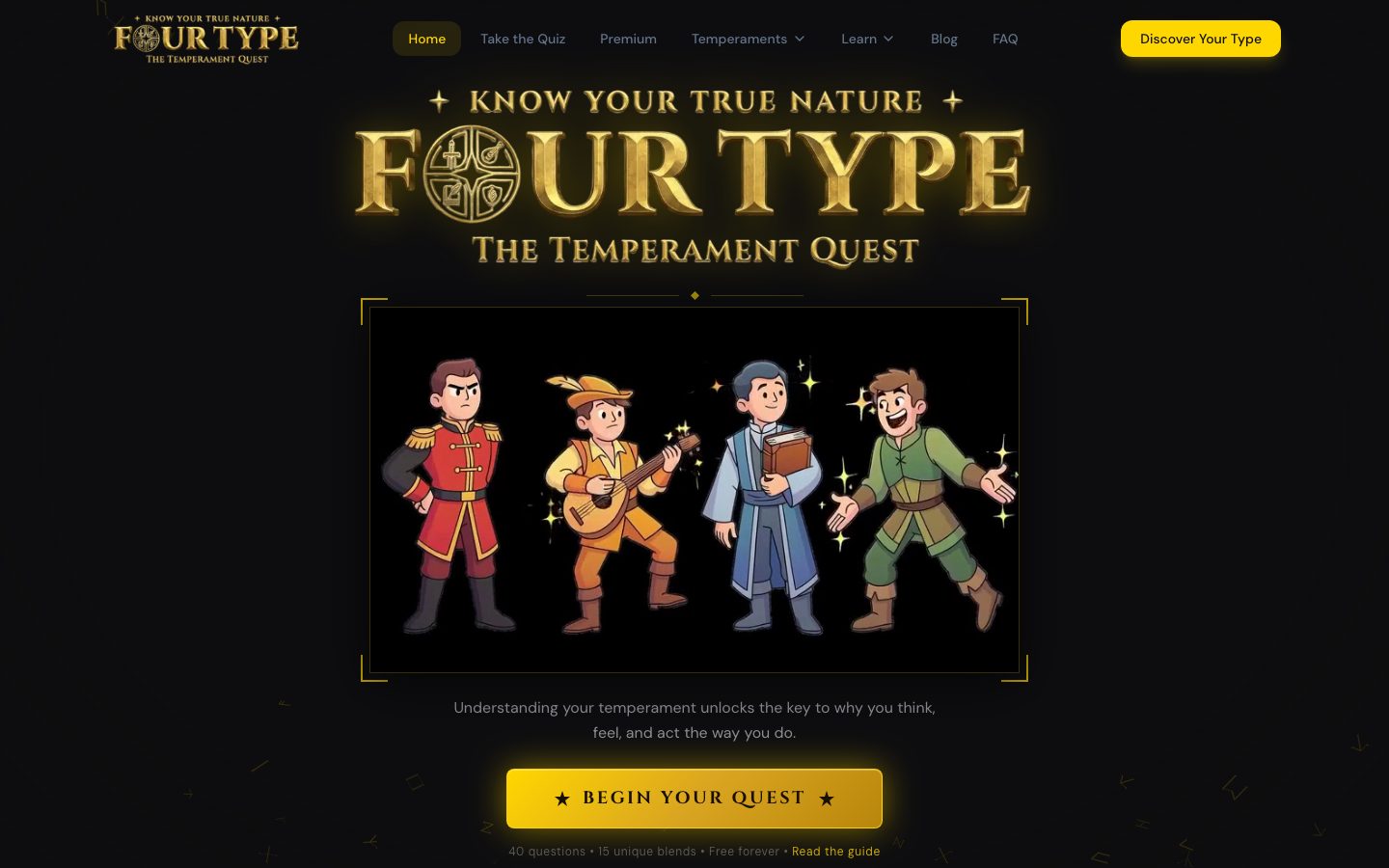
The quiz begins with a name and four simple rules. The visitor answers 40 behavior questions. The result compares Choleric, Sanguine, Melancholic, and Phlegmatic scores, then points toward a primary and secondary pattern. The free result appears before optional email capture. Guides explain score spread, close results, and the limits of the model.
03
What I learned
The character layer helps recall, but the score spread carries the useful nuance. A close result should invite comparison rather than a rigid label.
PAIN POINTS
What the product addresses
- Low-trust quiz presentation
- Results that feel generic or disposable
- Paywalls introduced before value is demonstrated
DECISIONS
Decisions that shaped it
- Ask about repeated behavior, pressure, motivation, and communication.
- Show all four scores instead of only one fixed label.
- Give the core result before optional email capture.
- State that the quiz is for education and self-reflection.
LEFT OUT
What I deliberately did not build
- A paywall or required email before the core result.
- Using the result for diagnosis, hiring, medical advice, or permanent identity claims.
MEASURES
What I would measure
- Quiz starts that reach all 40 answers.
- Users who read the score spread before opening a type guide.
- People who mistake the result for diagnosis or employment guidance.
EVIDENCE AND BOUNDARIES
What this note is based on
- Visible on fourtype.com on 21 July 2026: the free 40-question quiz, four score labels, no required email, score-spread explanation, subtype guidance, and methodology page.
- FourType is an educational self-reflection product. I did not verify psychometric validity, medical use, hiring use, diagnosis, or the site's public participation claim.
RELATED WORK