01
The problem I saw
An AI team is easier to discuss once a person has to decide what to recruit, where to place it, and how to survive the next breach. The challenge was to make those choices legible through a small playable loop instead of a product explanation alone.
02
What I built
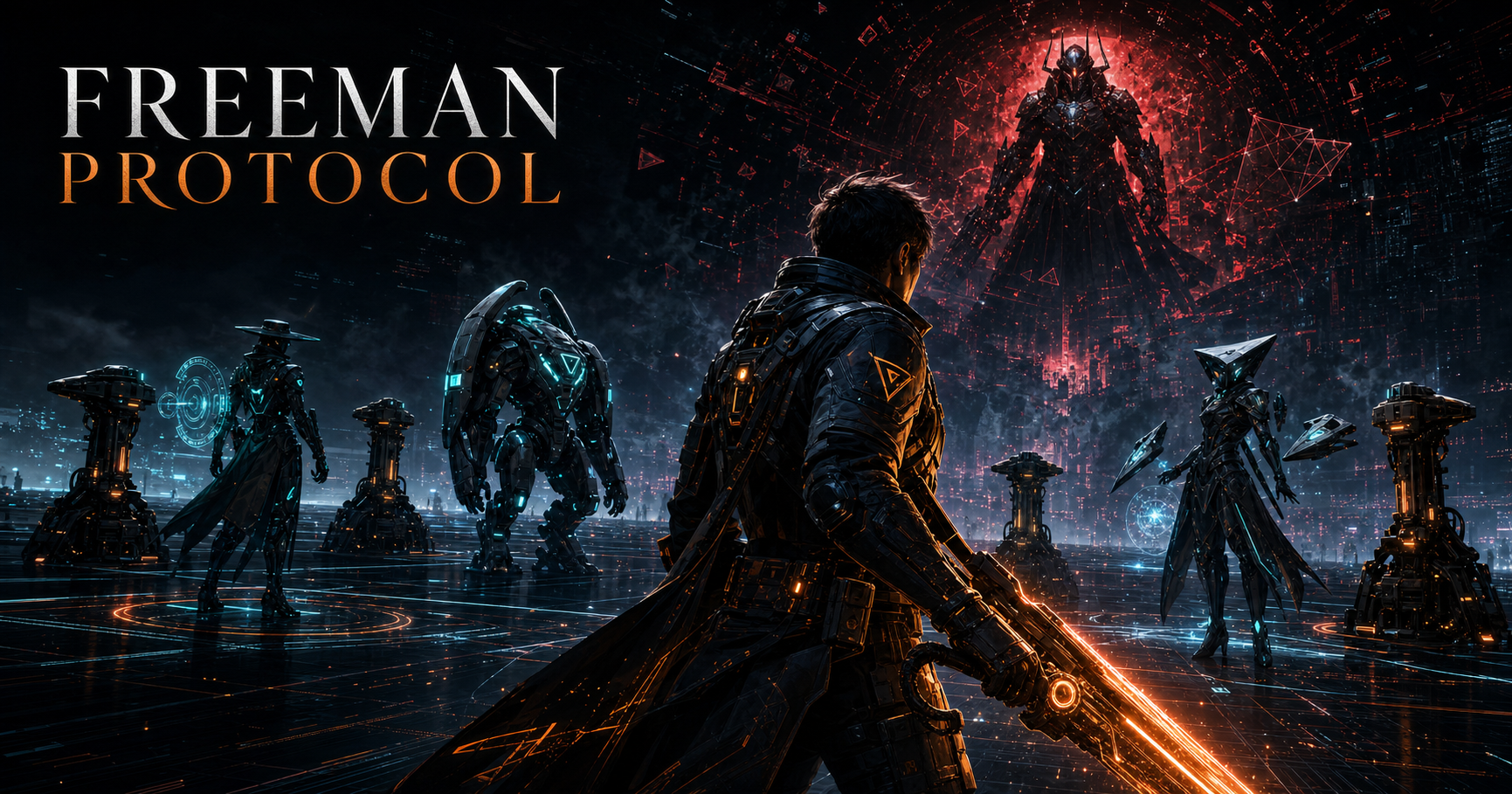
Freeman Protocol opens as an isometric cyber-defense action RPG. The public page asks the player to recruit AI agents, deploy sentry towers, give agents orders, destroy viruses for Compute, survive seven breaches, and face Rootkit Prime. The visible loop is a prototype game loop: movement, shooting, slashing, recruitment, placement, upgrades, and wave progression.
03
What I learned
A playable version can make an abstract AI concept easier to interrogate. The next proof is not more lore. It is whether players understand the choices, return to test different team shapes, and can explain what the agents actually changed.
PAIN POINTS
What the product addresses
- AI-agent ideas that stay abstract
- Strategy systems difficult to understand from a diagram alone
- Playable prototypes that show action without explaining the system
DECISIONS
Decisions that shaped it
- Put the agent system inside a combat objective so strategy has immediate consequences.
- Make recruitment and sentry placement visible actions instead of background lore.
- Use waves and a final boss objective to give the experiment a clear beginning, middle, and end.
- Keep the page playable in the browser so the idea can be judged through interaction.
LEFT OUT
What I deliberately did not build
- Calling the prototype a production-ready autonomous-agent platform.
- Explaining the system only through a static diagram or launch copy.
- Claiming retention, balance, multiplayer depth, or real-world agent performance without evidence.
MEASURES
What I would measure
- Whether players understand what an agent contributes after one mission.
- Whether sentry placement changes the way players approach a breach.
- Where players stop before the seven-breach objective.
- Whether the playable loop creates a clearer conversation about agent-native product design.
TRANSFER
Where this may transfer
The same design question applies to enterprise AI tools: if a user cannot see where an agent acts, what it costs, and when a person should intervene, the idea remains a demo rather than a working product.
EVIDENCE AND BOUNDARIES
What this note is based on
- Visible on freeman.skillrivals.com on 30 July 2026: the browser game presents an isometric cyber-defense arena, AI-agent recruitment, sentry deployment, wave progression, Compute rewards, seven breach objectives, and Rootkit Prime as the final objective.
- The public page was reviewed as a playable prototype. I did not verify the underlying agent autonomy, multiplayer infrastructure, retention, balancing, production readiness, revenue, or player analytics.
ADVISORY RELEVANCE